
Over my three decades as an Enterprise Architect, I have seen many technology cycles driven by raw executive excitement. But few have created as vast a gap between board-level perception and engineering reality as the current Artificial Intelligence boom.
Walk into almost any C-suite or boardroom today, and the conversation is dominated by base models: Which foundation model has the highest benchmark score? Who has the largest context window? Should we adopt GPT-4o, Claude 3.5, or an open-source model?
As architects, it is our job to step back, look at the big picture, and deliver a crucial truth: A base AI model is not an enterprise system.
A Large Language Model (LLM) or autonomous agent is merely a probabilistic reasoning engine. Dropping a raw, unharnessed LLM into an enterprise environment is like mounting a 1,000-horsepower Formula 1 engine onto a wooden wagon chassis. You don’t have a high-performance vehicle; you have a catastrophic hazard waiting to happen.
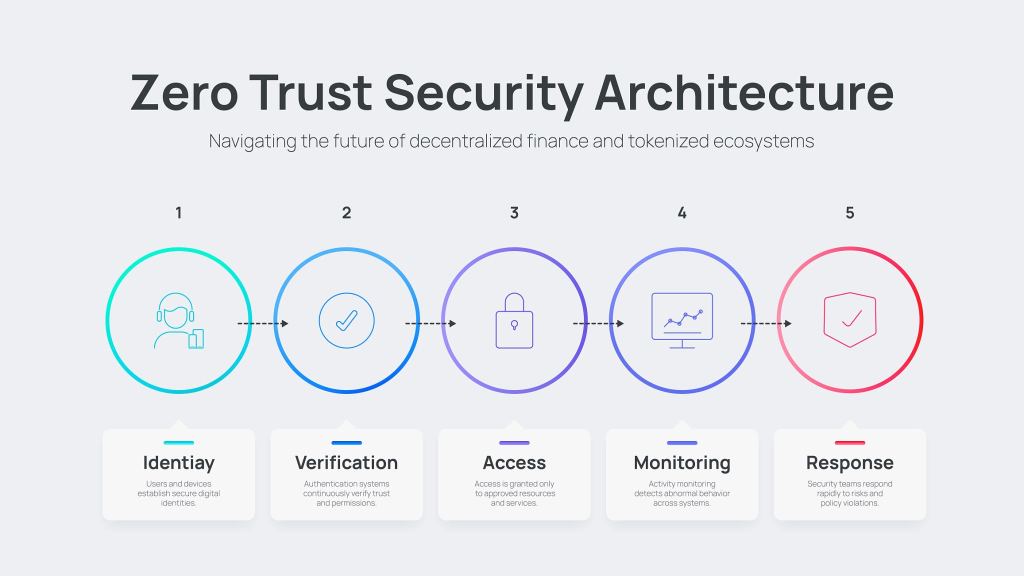
Zero Trust Architecture: The foundational security paradigm required for enterprise AI harnesses.. Source: Whale Design / Getty Images
To transform probabilistic AI into a reliable, secure, and value-generating enterprise capability, we must focus on what surrounds it: The AI Harness.
The AI Harness is the structural wrapper of policy engines, identity firewalls, semantic data layers, deterministic guardrails, and audit loggers that encase the AI model.
While the AI model handles probabilistic reasoning (guessing the next most likely token or plan), the AI Harness enforces deterministic control (guaranteeing that system boundaries, security policies, and data governance rules are strictly respected).
   +-----------------------------------------------------------------------------------+
|                                 THE AI HARNESS                                    |
|                                                                                   |
|  [ Identity & Context Firewall ] ==> [ Semantic Layer ] ==> [ DLP Guardrails ]    |
|               │                            │                      │               |
|               ▼                            ▼                      ▼               |
|  +-----------------------------------------------------------------------------+  |
|  |                    PROBABILISTIC REASONING ENGINE                           |  |
|  |                            (Base LLM / Agent)                               |  |
|  +-----------------------------------------------------------------------------+  |
|               │                            │                      │               |
|               ▼                            ▼                      ▼               |
|  [ Schema Validation ]    ==>   [ Policy-as-Code ]   ==>  [ Immutable Audit ] |
+-----------------------------------------------------------------------------------+
A superior AI Harness makes even a modest model safe, auditable, and valuable. Conversely, a state-of-the-art model without a harness is an unpredictable operational and regulatory liability.
To build a resilient enterprise harness, we must address security and data integrity across all three fundamental data states: Data at Rest, Data in Motion, and Data in Use.
A fundamental rule of Zero Trust architecture is that an AI system must never inherit broader permissions than the human user initiating the request.
- Prompt Sanitization & PII Masking: Intercepting payloads before they reach the model to strip sensitive corporate data or personal identifiable information (PII).
- Contextual RBAC: Mapping Role-Based Access Control dynamically so that the model’s working memory only contains documents and data the specific user is authorized to read.
Raw models do not know your corporate business logic; they rely on Retrieval-Augmented Generation (RAG), Knowledge Graphs, and Vector Databases.
- Data Estate Governance: Ensuring that vector embeddings and knowledge bases are continuously cleansed, version-controlled, and cryptographically segregated by business unit.
- Metadata Classification: Tagging unstructured data at the source so that retrieval engines respect data loss prevention (DLP) flags automatically.
This is where the separation between thinking and doing occurs. An LLM may reason that it should trigger a $50,000 wire transfer or modify a production database schema, but it must never execute that action directly.
- Schema Validation & Policy-as-Code: Forcing all model outputs into strict JSON/OpenAPI schemas that pass through traditional, deterministic policy gateways.
- Human-in-the-Loop Circuit Breakers: Requiring explicit human approval whenever an agentic workflow crosses a predefined financial, operational, or compliance threshold.
Under emerging global frameworks (such as SEC requirements, HIPAA, GDPR, and the EU AI Act), enterprises must be able to explain why an automated system made a decision.
- Complete Lineage Logging: Capturing the exact input prompt, retrieved context chunks, system instructions, model temperature, intermediate reasoning steps, and final output in an immutable audit ledger.
In Dr. Stephen Covey’s timeless framework The Seven Habits of Highly Effective People, Habit 2 instructs us to “Begin with the End in Mind.”
In Enterprise Architecture, the “end” is not shipping a quick AI feature this quarter. The “end” is building an adaptable, resilient enterprise that stands the test of time while foundational technologies shift under our feet.
Because the AI model landscape is evolving at a breakneck pace, tying your application code directly to a specific LLM API is an architectural failure.
The AI Harness serves as the ultimate Abstraction Layer. By wrapping your AI capabilities inside a standardized enterprise harness, you decouple your business applications from any single AI vendor. When a faster, cheaper, or more capable model emerges next month, an enterprise with a well-architected harness can swap the base model in hours with a single configuration change—without rewriting application code, altering security policies, or retraining business workflows.
Business leaders often view architecture and security controls as brakes that slow down innovation. But why do high-performance sports cars have advanced braking systems? They have brakes so they can drive fast safely.
The AI Harness is the enterprise braking system. By providing deterministic guardrails, automated compliance auditing, and robust DLP protection, the Harness gives business units the confidence to deploy autonomous AI capabilities rapidly without fear of data breaches, hallucinations, or regulatory penalties.
As architects and technology leaders, we must guide the executive conversation away from model hype and back toward systemic discipline.
Models will come and go. Today’s leader will be tomorrow’s commodity. But an enterprise that invests in a robust, model-agnostic AI Harness builds a lasting competitive advantage—an architecture defined by trust, operational resilience, and true business alignment.
Let’s Discuss: Is your organization currently evaluating AI investments through the lens of individual base models, or are you actively building an enterprise-wide AI Harness?
To explore more strategic insights on navigating enterprise cloud, cybersecurity, and AI architecture, read the full series at meghastuti.com.